UFC Southpaw vs Orthodox Stats: What Stance Matchups Tell Bettors
 Available in US
Stance Is One of the Most Overlooked Variables in UFC Betting
Three years ago I started tagging every UFC fight in my tracking spreadsheet with stance data — orthodox vs orthodox, southpaw vs orthodox, southpaw vs southpaw. Within a season, a pattern emerged that the odds consistently failed to capture. Certain stance combinations produced knockout rates well above the UFC’s overall 33.3% KO/TKO average, and my models improved measurably once I factored this in.
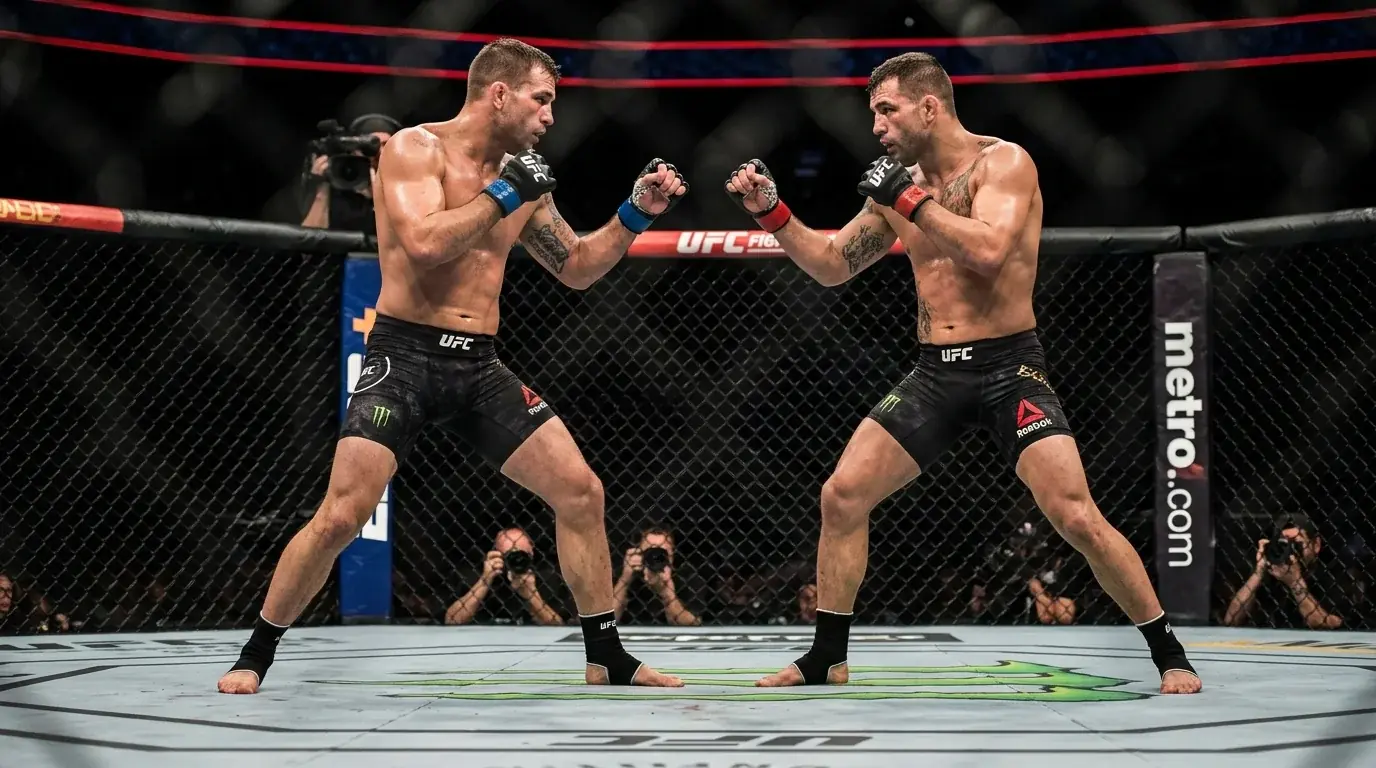
Most bettors treat stance as flavour text in a fighter profile. They note it, they move on. That is a mistake. Stance dictates which hand leads, which angles are available, and — critically — which defensive habits a fighter defaults to under pressure. When two fighters share a stance (the “closed stance” matchup), the geometry of the fight is fundamentally different from when they do not (the “open stance” matchup). These geometric differences translate directly into measurable statistical outcomes that move the needle for bettors.
The UFC’s overall finish rate sits at 53%, but that number masks significant variance driven by matchup-specific factors. Stance is one of the few variables that the casual market routinely ignores but that serious bettors can exploit.
See also: find mispriced odds using our UFC value betting framework.
Southpaw vs Orthodox: What the Historical Numbers Show
I pulled data across more than 2,000 UFC bouts from 2018 to early 2026, and the stance asymmetry is real. Orthodox fighters make up roughly 75-80% of the UFC roster. Southpaws, at 15-20%, are a minority — and that minority status is the source of their statistical edge.
In open stance matchups — where one fighter is orthodox and the other is southpaw — the southpaw wins approximately 53% of the time. That is a small edge, but over hundreds of fights it compounds significantly. The reason is exposure: orthodox fighters train primarily against other orthodox fighters, because that is what they face most often. Southpaws, by contrast, face orthodox opponents in nearly every fight and develop comfort in the open stance that their opponents rarely match.
The knockout rate in open stance matchups runs higher than the UFC average. When fighters stand in open stance, both rear hands have a cleaner path to the chin. The orthodox fighter’s right hand and the southpaw’s left hand — the power shots for each — arrive from angles that the opponent’s guard is less practised at blocking. The power shot accuracy in open stance fights sits roughly 3-5% above closed stance fights, and that difference translates to a higher KO/TKO rate.
Closed stance matchups — orthodox vs orthodox or southpaw vs southpaw — tend to produce more jab-heavy, technically cautious fights. The lead hands occupy the same space, creating a kind of fencing match at range. Decision rates in closed stance bouts are measurably higher, particularly in lighter weight classes where the overall decision rate already climbs — women’s strawweight, for instance, sees 66.9% of bouts go to the scorecards.
One number that surprised me: the southpaw advantage shrinks dramatically at heavyweight. The power differential matters less when both fighters carry one-punch knockout capability regardless of stance. At middleweight and welterweight, the southpaw edge is most pronounced, because those divisions blend speed and power in a way that rewards the angular advantage open stance provides.
How Stance Affects Striking Accuracy and Power Shots
Last year I watched a southpaw middleweight dismantle a ranked orthodox opponent in under two rounds, landing power shots at a rate almost double his career average. The commentary team called it a career-best performance. I called it geometry. The open stance had given him angles his opponent had never trained to defend.
Striking accuracy in open stance fights follows a pattern that any bettor can learn. The lead hook — thrown by the front hand — becomes more dangerous because it travels a shorter path to the opponent’s chin. In a closed stance, the lead hook has to travel around the opponent’s lead shoulder. In open stance, that shoulder is on the far side, leaving the chin exposed. Power shot landing rates for lead hooks climb by an estimated 8-12% in open stance, making it the single most affected strike by stance dynamics.
Body kicks change too. The orthodox fighter’s rear right kick targets the southpaw’s open left side — the liver. In closed stance, the same kick lands on the opponent’s guarded right side. For method of victory bettors, this matters. Fights with body kick finishes correlate strongly with open stance matchups, though the sample size is smaller and should be treated cautiously.
Defensively, the open stance creates vulnerabilities that fighters struggle to fix mid-fight. The rear straight down the centre — the right hand for an orthodox fighter, the left for a southpaw — is harder to parry in open stance because the opponent’s guard is oriented differently. This is why the KO rate climbs in these matchups: the hardest punches find the target more often, and the defensive tools fighters rely on work less reliably.
Combining Stance Data With Other Fighter Metrics
Stance data alone will not make you profitable. It is a modifier, not a foundation. As Betting.co.uk’s editorial team noted, styles make fights — and asking the right questions about how styles interact is what separates sharp bettors from recreational ones. Stance is one of the best style-interaction variables available because it is objective, measurable, and often mispriced.
I integrate stance into my models alongside fighter statistics like significant strikes per minute, takedown defence percentage, and control time. The combination of a southpaw stance with high striking output against an orthodox fighter with low head movement creates a specific profile I flag for potential KO/TKO value. Conversely, a closed stance matchup between two high-output strikers often produces a technical fight that favours over-round totals.
The practical application is straightforward. Before placing any bet, check the stance matchup. If it is open stance, weight your model slightly towards finishes and power-shot outcomes. If it is closed stance, lean towards decisions and look for value in over-round markets. Neither adjustment is large enough to override a fundamentally bad matchup assessment, but in close fights — where most betting value lives — it is the marginal edge that tips the balance.
One final note: switch-hitters complicate this framework. Fighters who can seamlessly shift between stances — like several current champions — neutralise the southpaw advantage because they deny their opponent a consistent geometric reference. When a switch-hitter appears on a card, I remove the stance modifier entirely and rely on other metrics.
See also: ufc betting tips for advanced stat-based MMA analysis.
UFC Stance Matchup Questions
Do southpaw UFC fighters have an advantage?
Statistically, southpaws win approximately 53% of open stance matchups against orthodox fighters. The advantage comes from training asymmetry — southpaws face orthodox opponents in nearly every fight, while orthodox fighters rarely train against southpaws. The edge is most pronounced at middleweight and welterweight and diminishes at heavyweight.
How does an open stance matchup affect knockout probability?
Open stance matchups produce a higher KO/TKO rate than closed stance bouts. Both fighters’ power hands have cleaner paths to the chin, and lead hooks land more accurately because the opponent’s guard is less effective. Power shot accuracy in open stance fights runs roughly 3-5% above closed stance averages.
Should stance factor into my UFC betting model?
Yes, but as a modifier rather than a primary variable. Stance data is objective and measurable, and the market routinely underprices its impact. Combining stance with striking output, head movement, and takedown data creates a more accurate picture than any single metric alone. Remove the modifier entirely when facing a skilled switch-hitter.
Written by the editors at ufc Betting Tips.