UFC Live Betting: In-Play MMA Strategy and When to Strike
 Available in US
Table of Contents
- Live UFC Betting Is Booming — But Most Punters Lose In-Play
- How In-Play UFC Odds Move Round by Round
- MMA Odds Volatility: Why Live Lines Swing Harder Than Other Sports
- Three In-Play Scenarios Where Value Appears
- Pre-Fight vs Live: Splitting Your Staking Plan
- Common Live Betting Mistakes in MMA
- Which UK Platforms Handle Live UFC Betting Best
- Live UFC Betting Questions
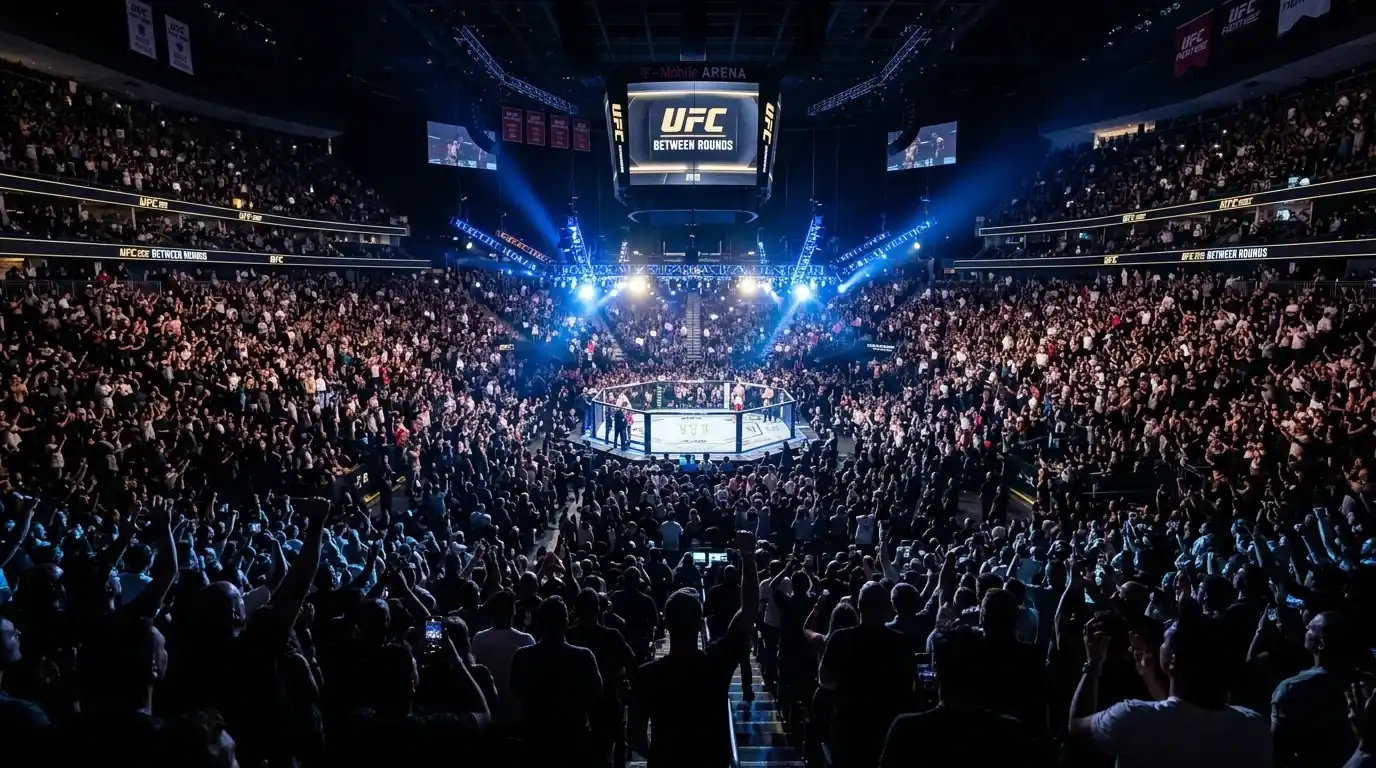
Live UFC Betting Is Booming — But Most Punters Lose In-Play
The first time I placed a live UFC bet, I watched a heavy favourite get dropped in the first round, panicked, and backed the underdog at terrible odds. The underdog lost in the second round. That single bet taught me more about in-play discipline than six months of pre-fight analysis — live betting amplifies every instinct you have, and most of those instincts are wrong.
In-play wagering now accounts for over 62% of all online betting revenue globally, growing at roughly 13.6% per year. MMA is one of the fastest-expanding segments of that market because fights produce constant, dramatic momentum shifts that create betting opportunities every 30 seconds. The problem is that those same momentum shifts trigger emotional reactions that destroy bankrolls faster than any pre-fight losing streak.
Live UFC betting is not a faster version of pre-fight betting. It is a fundamentally different discipline with its own logic, its own traps, and its own edge cases. The skills that make you profitable before an event starts — statistical analysis, matchup modelling, value identification — still matter, but they operate under extreme time pressure and incomplete information. A fighter who looked dominant in the first round might be gassing. A fighter who got taken down three times might have been baiting the takedown to set up a sweep. The data updates in real time, but your ability to interpret it correctly under pressure does not improve just because you are watching live.
What follows is the framework I use for in-play MMA wagering — when to engage, when to wait, and when to close the app entirely. This is not a guide to placing more live bets. It is a guide to placing fewer, better ones.
See also: back your live picks with data from our fighter stats betting breakdown.
How In-Play UFC Odds Move Round by Round
I spent three full UFC cards doing nothing but tracking odds movement without placing a single bet. Just watching. That exercise showed me how bookmaker algorithms respond to fight action, and it changed my entire approach to live MMA wagering.
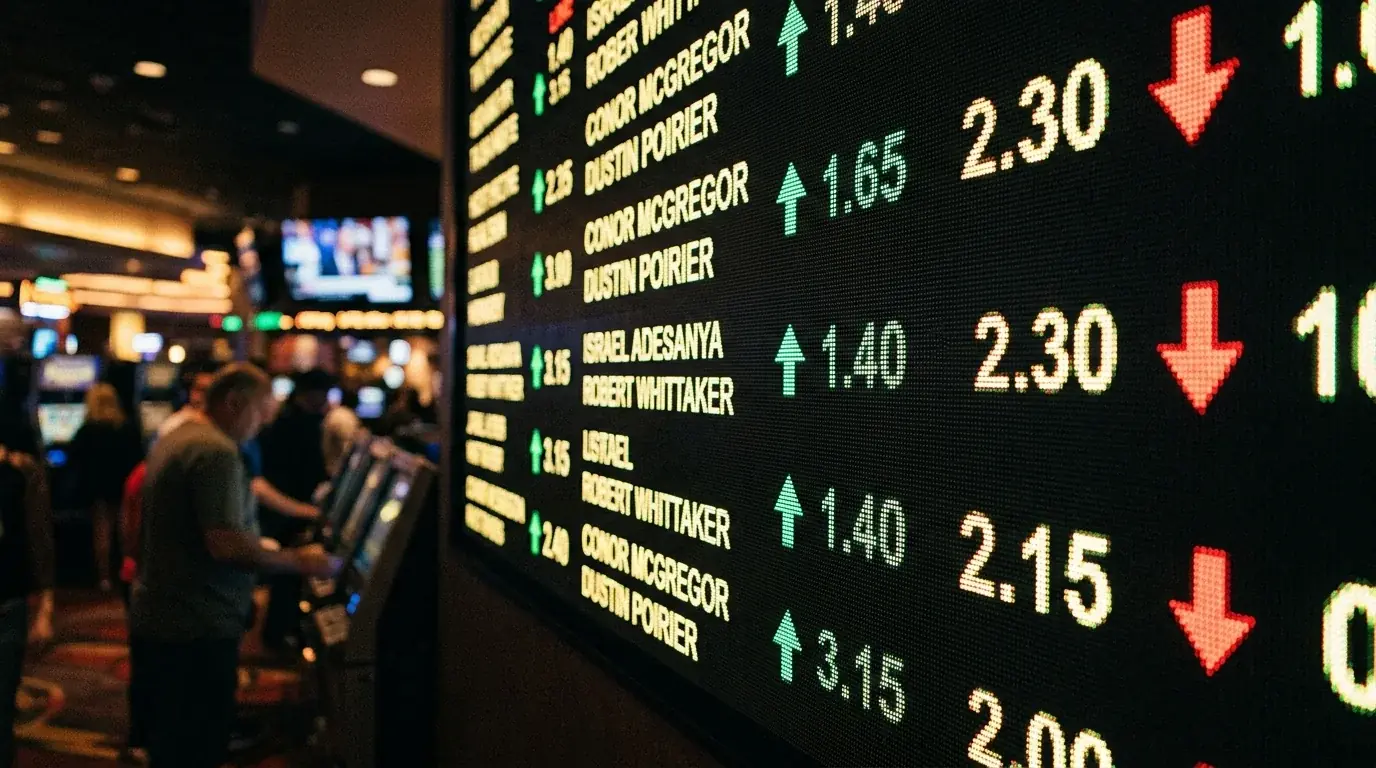
UFC live odds recalculate after every significant event: a knockdown, a takedown, a submission attempt, a visible cut, a noticeable shift in output. Between rounds, odds typically adjust most aggressively because the bookmaker’s model has a clean data point — who won the round, by what margin, and what the energy levels looked like heading into the break. The round break is where the biggest line movements happen and where most of the genuinely mispriced lines appear.
The mechanics work like this. Before the fight, the opening moneyline reflects each fighter’s pre-fight probability. Once the bout starts, the live odds engine incorporates real-time data — strikes landed, control time, knockdowns, visible damage — and adjusts the line continuously. If a -300 favourite loses the first round clearly, their live line might shift to -150 or even closer to pick’em territory. If that same favourite dominates, the line might move to -500 or beyond, where there is almost no value left in backing them.
Round-by-round movement follows a predictable pattern in most UFC bouts. The first round produces the largest adjustment because the market is moving from projected probability to observed reality. The second round adjusts less dramatically unless something fight-changing occurs — a knockdown, a near-finish, or a massive shift in pace. By the third round, the live line is usually well-calibrated to the actual fight, and the mispricing windows narrow significantly.
Championship fights — five rounds instead of three — create a different dynamic entirely. The additional two rounds mean the odds engine has more time to self-correct, but they also create more opportunities for fatigue-driven reversals. A fighter who wins rounds one through three convincingly might still have value against them if you know they tend to fade in championship rounds. The five-round format rewards patience in a way that three-round fights do not.
Understanding this rhythm is the prerequisite for everything else in live UFC betting. You are not reacting to what just happened — you are anticipating how the odds engine will respond to what just happened, and deciding whether that response is correct or whether it has overreacted.
MMA Odds Volatility: Why Live Lines Swing Harder Than Other Sports
Try live betting a Premier League match and then live betting a UFC bout on the same night. The difference in odds volatility is staggering — and understanding why it exists is what separates profitable live MMA bettors from everyone else.
Football, basketball, cricket — these are high-scoring team sports where individual moments rarely change the overall probability by more than a few percentage points. A goal in football shifts the line. A touchdown shifts the line. But the underlying probability of the match outcome moves gradually because there are many scoring events across a long contest. In MMA, a single clean punch can end a fight instantly. With 53% of UFC bouts ending in a finish — 33.3% by KO/TKO alone — the probability of sudden, fight-ending action is baked into every second of live play. The odds engine knows this and responds accordingly, producing swings that would be unthinkable in team sports.
This volatility cuts both ways. It creates genuine value windows when the algorithm overreacts to a single exchange — a fighter gets clipped, the live line swings dramatically, but you know from your pre-fight analysis that the fighter has strong recovery and chin durability. It also creates devastating traps when the algorithm underreacts to subtle signals that the fight is about to change — a fighter’s breathing pattern shifting, their stance widening, their output dropping in a way that the stats engine does not capture until the round ends.
The DRatings editorial team’s observation that analytical models work best with more data applies with particular force to live betting. During a fight, the data set is tiny — maybe five minutes of action, a few dozen significant strikes, one or two grappling exchanges. The odds engine is making probability estimates based on a sample size that no statistician would consider reliable. That inherent uncertainty is the source of both risk and opportunity in live MMA wagering. Respect the small sample. Do not pretend you know more than you do based on 90 seconds of cage time.
Three In-Play Scenarios Where Value Appears
Not every fight produces a live betting opportunity. Most do not. The discipline is knowing which situations historically create mispriced lines and having the preparation to act on them within a narrow window. After years of tracking live odds against outcomes, three scenarios consistently produce the best risk-adjusted returns.
The first is the grappler-who-loses-round-one-standing. Picture a wrestler or jiu-jitsu specialist whose game plan depends on takedowns and ground control. They lose the first round on the feet — outstruck, maybe even wobbled once. The live odds swing hard against them because the algorithm weighs what just happened, and what just happened was a striking loss. But the grappler has not yet implemented their actual strategy. If you know from pre-fight analysis that this fighter typically adjusts after feeling out the first round — and that their opponent has vulnerable takedown defence — the post-round-one line often overvalues the striker’s chances. At heavyweight, where roughly half of all bouts end in KO/TKO, this scenario carries more risk because the striker might finish the fight before any adjustment occurs. At lightweight or welterweight, where decisions are far more common, the grappler has more time to execute their plan, and the value window is wider.
The second is the visible-fatigue-mismatch in the late rounds. A fighter dominating on the scorecards starts breathing through their mouth, drops their hands between exchanges, and throws with less snap. The stats engine registers that they are still winning — they landed more strikes, they controlled the round — but the visual signs of exhaustion suggest the gap is closing fast. If the trailing fighter has demonstrated strong cardio in previous bouts and the leading fighter has historically faded in third rounds, backing the trailing fighter’s live line before the next round starts can offer genuine value. In women’s strawweight, where 66.9% of fights go to decision, late-round cardio advantages are especially predictive because there are fewer finish opportunities for the tiring fighter to end the bout before their endurance advantage disappears.
The third is the opening-round knockdown that does not lead to a finish. A fighter gets dropped in the first two minutes but survives, recovers, and finishes the round on their feet. The live line treats the knockdown as a major signal — correctly — but often overcorrects in favour of the fighter who scored it. If the dropped fighter has a history of durable recovery, if their chin has held up in previous bouts, and if the knockdown was more of a flash than sustained damage, the post-knockdown line can overestimate the probability of a stoppage. The key filter is the recovery quality: did the dropped fighter get back to their feet quickly and resume normal output, or did they survive on survival instinct alone? The difference determines whether the live line is a value opportunity or a trap.
In all three scenarios, the value depends on preparation you did before the fight started. Live betting without pre-fight analysis is gambling on reflexes. Live betting with pre-fight analysis is exploiting temporary mispricing — which is the entire point.
Pre-Fight vs Live: Splitting Your Staking Plan
Early in my live betting career, I made the mistake of treating my pre-fight and in-play wagers as the same bankroll. I would back a fighter before the event, then double down live when the fight went as expected, or hedge live when it did not. Within three months, I had no clear record of what was working and what was not — my tracking was a mess, and my bankroll was worse.
The solution that works for me — and that I recommend — is a hard split. I allocate a fixed percentage of my total bankroll to pre-fight positions and a separate, smaller percentage to live opportunities. The split varies depending on the card, but a reasonable starting point is 70% pre-fight, 30% live. The live allocation is further subdivided: no more than a third of it on any single in-play bet. This prevents a single emotional live wager from consuming an outsized share of the total.
The reasoning behind weighting pre-fight more heavily is simple. Pre-fight decisions are made calmly, with full data, after thorough analysis. Live decisions are made under time pressure, with incomplete information, while adrenaline is flowing. Your edge — if you have one — is almost always larger pre-fight. The MMA betting market hit $10.3 billion in handle during 2024 alone, growing 17% year over year, and much of that growth is driven by in-play volume. That means the live markets are increasingly liquid and increasingly efficient. Finding exploitable edges in-play is harder than it was three years ago, which makes disciplined allocation more important, not less.
One approach that bridges both is the conditional pre-commitment. Before the fight, I identify one or two specific live scenarios that my pre-fight analysis suggests could produce value — for example, “if Fighter A loses round one on the feet, back them at anything better than +150 because their grappling adjustment pattern is reliable.” This is not a binding commitment, but it is a framework that prevents reactive decision-making. By the time the scenario actually occurs in the fight, I already know what I am looking for and what price I need. The decision is pre-loaded; only the execution is live.
For a deeper framework on structuring your overall UFC betting strategy — including staking models and tracking systems — the principles that apply pre-fight scale directly to live allocation once you commit to enforcing the split.
Common Live Betting Mistakes in MMA
I have made every mistake on this list at least once. Several of them I made repeatedly before the pattern became painful enough to change. Live MMA betting punishes bad habits faster than any other form of sports wagering because the feedback loop is immediate — you place the bet, and within minutes you know whether your decision was sound or disastrous.
Chasing a knockdown is the most expensive habit. A fighter scores a dramatic knockdown in the first round, the crowd erupts, and the live odds on the standing fighter collapse. You back them because the finish feels inevitable. But many UFC knockdowns do not lead to finishes — the downed fighter recovers, regroups, and the bout continues with a now-adjusted dynamic. By the time you realise the knockdown was a flash rather than a sustained shift, the line has already moved past any value, and you are holding a bet placed at the worst possible price.
The second is hedging a winning pre-fight position out of fear. You backed a fighter at +200 before the event. They lose the first round, and your pre-fight bet looks shaky. Panic sets in, and you place a live bet on the opponent to “protect” your position. If your original analysis was sound — if you genuinely identified value at +200 — a single lost round does not invalidate that assessment. Hedging on emotion is a way of paying the bookmaker twice: once for your original position and once for the privilege of undermining it.
Over-betting volume is the third. Live MMA odds update continuously, which creates the illusion that every update is an opportunity. It is not. Most live price movements reflect accurate recalculation, not mispricing. If you find yourself placing more than one or two live bets per card, you are almost certainly betting on noise rather than signal. My rule is simple: if I cannot articulate in one sentence why this live line is wrong, I do not touch it.
The fourth is ignoring the between-rounds window. Most casual live bettors react during the action — a big punch lands, they rush to the app. By the time they navigate to the market and place the bet, the line has already adjusted. The between-rounds break is where the most reliable value windows appear, because the odds engine has made its adjustment and you have 60 seconds to evaluate whether that adjustment was correct. That 60-second window is where most of my profitable live bets originate.
The last is treating live betting as entertainment rather than analysis. If the primary reason you are betting in-play is because it makes watching the fight more exciting, you will lose money consistently. The excitement is the cost, not the benefit. Profitable live betting often means watching an entire fight without placing a single wager because no value appeared — and being comfortable with that outcome.
Which UK Platforms Handle Live UFC Betting Best
Not all UK-licensed bookmakers treat live MMA equally, and the differences matter more than you might expect. After testing in-play UFC markets across multiple operators over the past three years, the variation in speed, market depth, and odds quality is significant enough to affect profitability.
The first variable is latency — the delay between a fight event occurring and the live odds updating on your screen. In MMA, where a single exchange can change the entire fight, even a two-second delay is meaningful. The major operators with dedicated MMA trading teams — the ones that invest in real-time fight data feeds — generally update faster than smaller operators who rely on third-party odds providers. Since UFC replaced DraftKings with bet365 as its official betting partner in 2025, the data infrastructure supporting UK live MMA markets has improved, though the benefits are not distributed evenly across all licensed bookmakers.
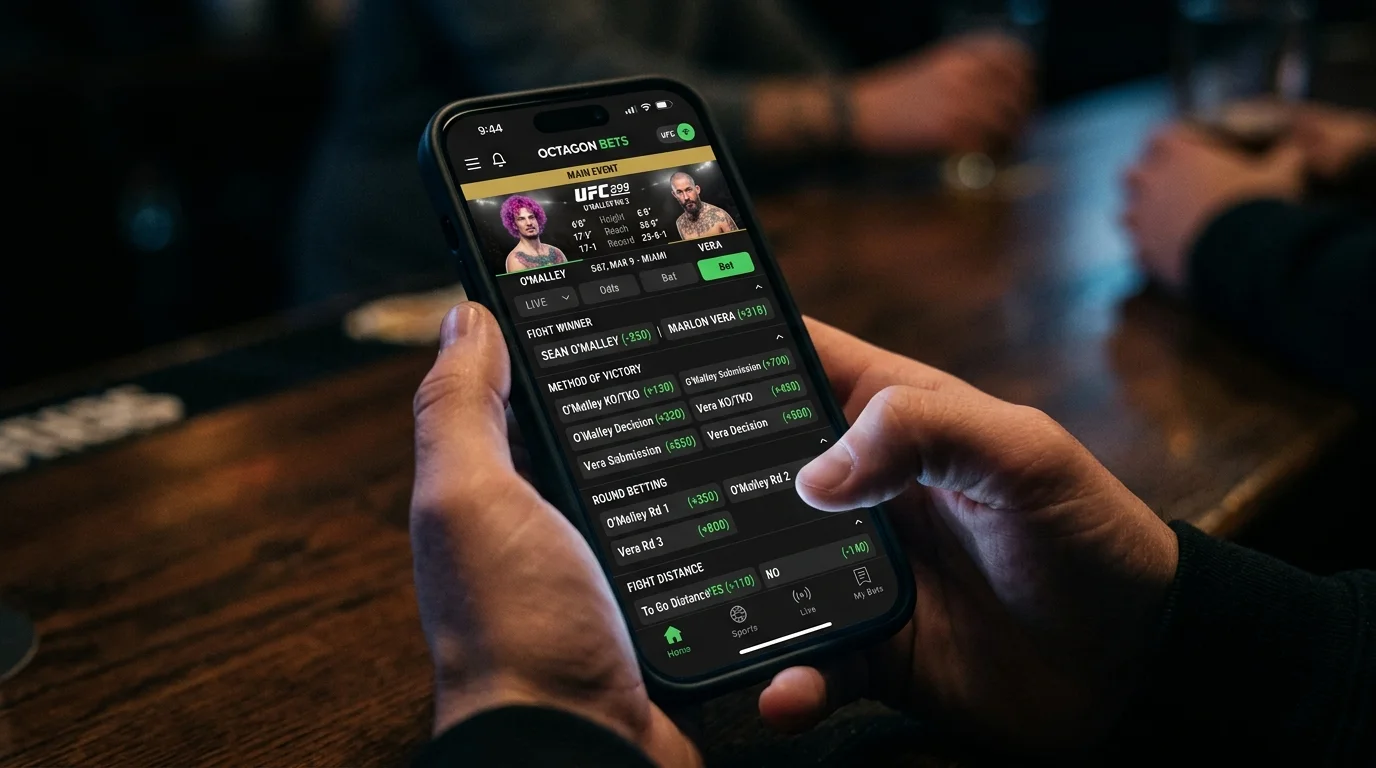
Market depth is the second factor. Some operators offer only the basic live moneyline — who wins the fight. Others provide round-by-round betting, method of victory adjustments, and total rounds over/under that update throughout the bout. Deeper live markets give you more options for expressing a specific view. If your analysis tells you a fight is heading to a decision but the moneyline does not offer value, having access to the live total rounds market lets you act on that read directly.
The UK sports betting market generates approximately 2.48 billion pounds in gross gaming yield annually, and the online segment grew 13.1% last year. That growth is driving platform investment in live betting infrastructure across all sports, including MMA. The practical benefit for UFC bettors is that platform quality is improving year over year — the live experience available to UK punters in 2026 is substantially better than what existed even two years ago.
Cash-out availability varies as well. Some operators allow partial cash-out on live UFC bets, letting you lock in profit on a position that has moved in your favour without closing it entirely. Others offer cash-out only on pre-fight bets. If your live strategy involves conditional exits — taking profit at a certain threshold rather than riding the position to the final bell — confirm that your operator supports live cash-out for MMA before the event starts. Discovering mid-fight that you cannot exit a position is not the kind of surprise you want.
One practical recommendation: open accounts with at least two operators that offer competitive live MMA markets. Price comparison at the pre-fight stage is standard practice, but doing it live is even more valuable because the spread between operators widens during periods of high volatility. Having two apps open during a fight takes seconds and can improve your effective odds on every live wager.
See also: ufc betting tips for pre-fight and in-play market guides.
Live UFC Betting Questions
How fast do UFC live odds change during a fight?
UFC live odds can shift within seconds of a significant event — a knockdown, a takedown, a visible cut, or a major shift in striking output. The largest adjustments typically occur between rounds, when the bookmaker’s model recalculates based on the completed round’s data. During the action itself, odds update continuously but with slight latency depending on the operator’s data feed speed.
Can you cash out UFC live bets with UK bookmakers?
Many UK-licensed operators offer cash-out on live UFC bets, though availability varies between platforms and between markets. Some allow full and partial cash-out on live moneylines, while others restrict cash-out to pre-fight positions only. Check your operator’s cash-out policy for MMA events before placing live wagers — the feature is not universally available across all UFC markets.
Is live betting on UFC more profitable than pre-fight wagers?
Not inherently. Live betting offers different value opportunities — particularly when odds engines overreact to dramatic in-fight events — but it also exposes you to higher emotional risk and tighter decision windows. Most experienced MMA bettors find their edge is larger pre-fight, where analysis is calm and data is complete. Live betting works best as a complement to pre-fight positions, not a replacement.
What round-by-round patterns should I watch for in live MMA betting?
The most reliable pattern is fatigue-driven output decline. Track whether a fighter’s striking volume and movement quality drops between round one and round two — if it does, their round three performance is likely to decline further. Also watch for tactical adjustments: grapplers who lose round one standing often switch to aggressive takedown attempts in round two, which can create value if the live line has not accounted for the style shift.
Created by the ”ufc Betting Tips” editorial team.