UFC Heavyweight Betting Tips: What the KO Data Tells You
 Available in US
The Heavyweight Division Is Where One Punch Changes Everything — and Every Bet
I remember a heavyweight co-main event in 2021 where the favourite was -500 on the moneyline. He had better footwork, faster hands, and a three-inch reach advantage. He was winning every exchange for four and a half minutes. Then his opponent landed a single overhand right, and the fight was over before the commentators finished their sentence. That is heavyweight in a nutshell — the division where five minutes of domination can be erased by three seconds of violence.
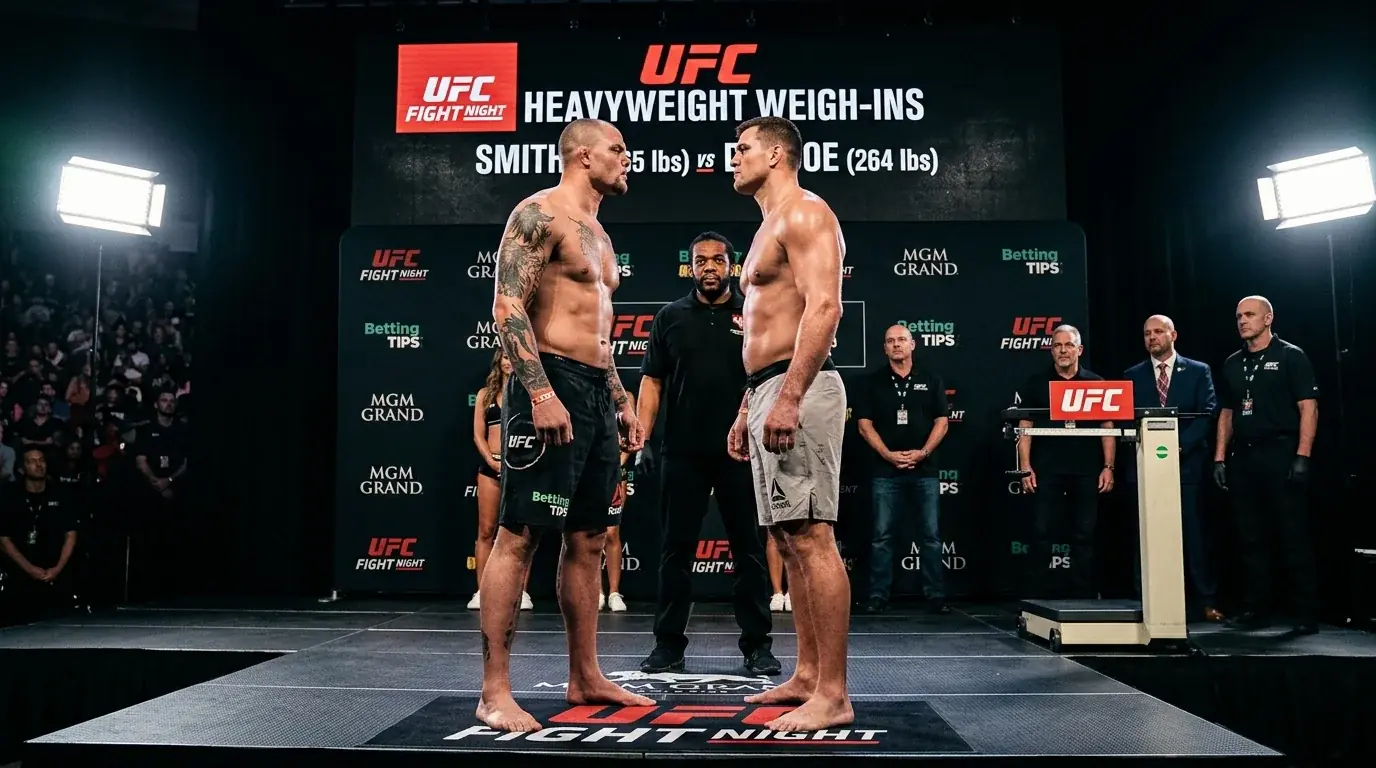
The numbers confirm what every MMA fan already senses. Roughly 50% of all heavyweight bouts end in KO/TKO, the highest rate of any UFC weight class. Only 28.6% go the distance to the judges’ scorecards. If you approach heavyweight betting with the same frameworks you use for lightweight or welterweight, you will consistently misjudge the probabilities. This division operates by different rules, and your betting has to follow.
See also: ufc betting tips for division-by-division MMA guides.
Heavyweight KO/TKO Rate: The Numbers Behind the Knockouts
That 50% knockout rate is not just a talking point — it is a structural feature of the division that creates specific, repeatable betting patterns. When half of all fights end in a stoppage and the majority of those stoppages are knockouts rather than submissions or doctor stoppages, the traditional moneyline bet carries a hidden fragility. A heavy favourite at -400 might be the better fighter in eight out of ten skills, but if the opponent has genuine one-shot power, the implied probability of an upset is higher than the line suggests.
Compare this to lightweight, where 29.1% of fights end in KO/TKO and 48% go to decision. In lightweight, the better fighter can afford a slower start, lose an exchange or two, and still win on the scorecards over fifteen minutes. In heavyweight, losing an exchange can mean losing consciousness. That compressed margin between “winning” and “finished” is why I consistently treat heavyweight moneylines with more scepticism than any other division, particularly when the favourite is priced above -300.
The overall UFC finish rate of 53% includes all weight classes, and using that number for heavyweight analysis will mislead you. The division-specific 50% KO/TKO rate plus the additional submission and other stoppage finishes means the actual finish rate in heavyweight approaches 70%. Barely three out of ten heavyweight fights go to the scorecards. That is not a minor deviation from the average — it is a fundamentally different competitive landscape that demands a recalibrated approach to every market.
Method of Victory and Round Totals in Heavyweight Fights
Heavyweight is where method of victory betting earns its keep. When half the division’s fights end in KO/TKO, the method market gives you a way to profit from that structural reality at odds that often exceed the moneyline. If you expect the favourite to win and you expect a knockout — which the divisional data supports as the single most likely outcome — the KO/TKO method price frequently offers better value than the straight moneyline because it absorbs some of the risk that the favourite could lose by decision or submission.
Round totals follow the same logic. With only 28.6% of heavyweight bouts reaching the judges, the “under” on round totals is live in almost every matchup. An over/under line set at 1.5 rounds in a three-round heavyweight fight is a genuine coin flip when both fighters carry power. When one fighter has a history of early finishes and the other has shown chin issues, the under 1.5 becomes a strong play at anything close to even money.
I approach heavyweight round totals by asking one question first: is there a realistic path for this fight to go fifteen minutes? If both fighters have the cardio, the chin durability, and the defensive wrestling to survive three rounds, the over has merit. But in most heavyweight matchups, especially below the top five, at least one fighter lacks one of those attributes. That deficiency is your signal to lean under.
See also: understand how fast the market is growing in our MMA betting handle and market size report.
Matchup Indicators That Predict Heavyweight Outcomes
Chin durability is the single most predictive factor in heavyweight betting. A fighter who has been dropped or rocked in recent bouts is far more likely to be finished in a division where every clean shot carries stopping power. I track knockdown rates and “moments hurt” across each fighter’s last five bouts as a proxy for chin reliability. A fighter with zero knockdowns absorbed in five heavyweight fights is a categorically different bet from one who has been dropped twice in their last three.
Cardio is the second indicator. Heavyweights who fade visibly after the first round are vulnerable in three-round fights and extremely vulnerable in five-round main events. A heavyweight who lands 80% of his significant strikes in round one but drops to 40% by round three is a first-round threat and a later-round liability. If you are backing that fighter, the method and round totals markets should reflect a narrow window rather than a full-fight thesis.
Wrestling changes the equation entirely. A heavyweight with elite wrestling can neutralise the knockout threat by controlling the fight on the ground, running time off the clock, and dragging the bout toward a decision. When a strong wrestler faces a heavy-handed striker, the fight dynamics shift away from the division’s default knockout mode. These matchups are where the over on round totals becomes attractive and where decision method picks can offer outsized value against a market that expects fireworks.
The last indicator is cage experience at the highest level. Heavyweight debut fighters and those stepping up from regional promotions carry additional uncertainty. Their power translates — physics does not change between promotions — but their ability to absorb UFC-level shots and maintain composure under pressure is unproven. That uncertainty widens the probable outcome range and makes underdog plays more viable than they would be against a proven commodity.
What is the knockout rate in UFC heavyweight fights?
Approximately 50% of all UFC heavyweight bouts end in KO/TKO, the highest rate of any weight class. Only about 28.6% of heavyweight fights reach the judges’ scorecards. The remaining fights end by submission or other stoppages, bringing the total finish rate in the division close to 70%.
Do over/under rounds bets favour the under in heavyweight UFC?
Statistically yes. With roughly 70% of heavyweight fights ending before the final bell and only 28.6% reaching a decision, the under on round totals is supported by divisional data in most matchups. However, specific matchups involving elite wrestlers or fighters with proven durability can shift the probability toward the over. Always assess the specific fighters rather than relying purely on divisional averages.
Are heavyweight fights the most unpredictable for betting?
Heavyweight is the most volatile division in terms of outcome uncertainty because every fighter carries fight-ending power. A single clean punch can reverse any skill advantage, which compresses the gap between favourite and underdog more than in lighter weight classes. This volatility makes heavyweight both the riskiest and potentially the most rewarding division for bettors who understand how to price the inherent chaos.
Prepared by the ufc Betting Tips editorial staff.