UFC Weight Cuts and Betting: What Happens When a Fighter Misses Weight
 Available in US
A Missed Weight Does Not Just Change the Fight — It Changes Every Bet on It
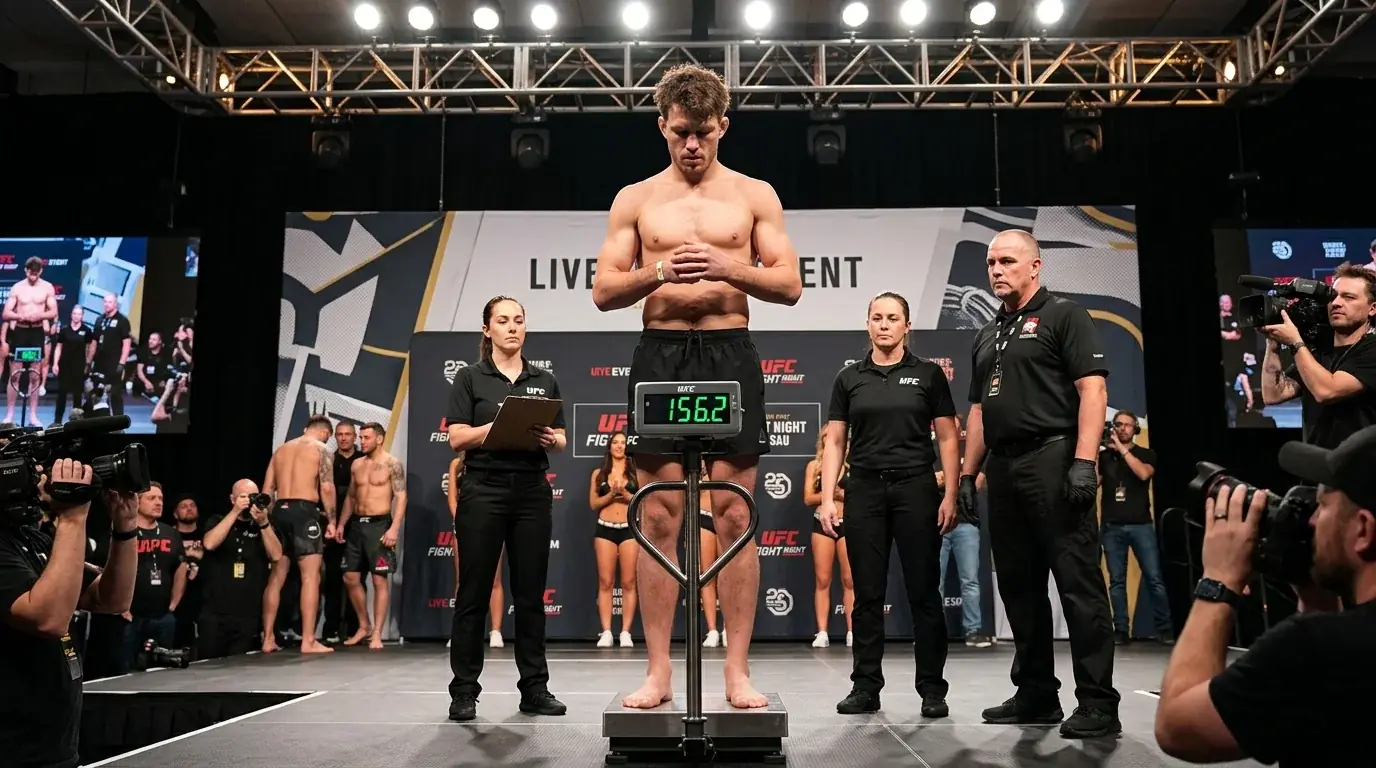
The weigh-in is twenty-four hours before the fight, and the headline fighter steps on the scale two pounds over the division limit. Within minutes, the betting market for that bout shifts — sometimes dramatically, sometimes barely at all. For most punters watching at home, the weight miss is a piece of fight-week drama. For bettors with money already placed, it is an immediate practical question: what happens to my wager?
Weight misses are a recurring feature of the UFC calendar. In a typical year, somewhere between eight and fifteen per cent of scheduled bouts see at least one fighter fail to make weight. That rate has fluctuated but never disappeared, despite the UFC tightening weight-cutting protocols. For bettors, each weight miss creates a set of questions about bet validity, market repricing, and the performance implications of a fighter who either cut too aggressively or could not cut at all. The overall finish rate of fifty-three per cent across all UFC bouts shifts in specific ways when one fighter enters the octagon carrying extra weight, and understanding those shifts gives you an edge in a market where most punters react emotionally rather than analytically.
UK Bookmaker Rules on UFC Weight Misses and Catchweight Bouts
The first thing to check when a UFC fighter misses weight is your bookmaker’s specific terms and conditions — because the rules vary. Across the approximately 5,825 licensed betting shops and their online platforms in the UK, there is no universal standard for how weight misses are treated. Most major UK bookmakers follow the principle that if both fighters agree to proceed with the bout at a catchweight, all pre-existing bets stand. The fight happens, a winner is determined, and your bet is settled normally.
However, some bookmakers void all bets if the bout is reclassified from a title fight to a non-title catchweight bout, because the conditions of the fight have materially changed. A championship bout carries different round structures — five rounds instead of three — and different competitive stakes that can influence fighter behaviour. If your bet was placed on a five-round title fight and the fight is reduced to three non-title rounds because one fighter missed weight, some operators will void the wager on the grounds that the event you bet on no longer exists in its original form.
Round betting and over/under markets are particularly sensitive to weight misses in title fights. If a five-round fight becomes a three-round fight, any bet on rounds four or five is automatically void. Over/under lines set for a five-round bout — such as over 3.5 rounds — become impossible to settle fairly in a three-round contest. Most bookmakers void these markets entirely when the round structure changes, but some will adjust the line if the catchweight fight retains the original round count.
My consistent advice is to screenshot your bet slip and the bookmaker’s terms before the weigh-in whenever you have money on a fight with a known weight-cutting risk. If a dispute arises, having a record of the terms at the time of your bet is your strongest position. As the Betting.co.uk editorial team emphasises, styles make fights — and the rules of your bet are just as important as the styles in the octagon when it comes to protecting your stake.
Do Fighters Who Miss Weight Actually Win More Often?
This is one of the most debated questions in MMA betting, and the data offers a nuanced answer. Fighters who miss weight win their subsequent bouts at a slightly higher rate than the baseline — typically in the range of fifty-five to sixty per cent, compared to the overall favourite win rate of around sixty to sixty-five per cent across all UFC bouts. At first glance, this seems to confirm the intuitive logic: a fighter who missed weight enters the octagon heavier, stronger, and better hydrated than their opponent, which provides a physical advantage.
The reality is more complicated. Much of the elevated win rate disappears when you control for the fact that fighters who miss weight are often the betting favourite in the first place — they missed weight because they are larger for the division, which is frequently why they were favoured. The size and strength advantage that helped them win was baked into the pre-fight line before the weigh-in ever happened. The weight miss itself adds less incremental advantage than the raw numbers suggest.
Where the data is more interesting is in finish rate. Fighters who miss weight and proceed to fight show a higher finish rate — particularly via KO/TKO — than their career averages. The extra weight they carry into the cage translates to greater power output, and the dehydration penalty they avoided means better cardio in the later rounds. For bettors, this means the method of victory and round totals markets are where the weight miss has the most exploitable impact, rather than the moneyline where the repricing typically absorbs the advantage.
The flip side also matters: fighters who miss weight sometimes show signs of a disrupted camp. Missing weight can indicate illness, injury, or poor discipline in the final days of preparation. A fighter who missed weight because of a stomach illness is not entering the octagon with a physical advantage — they are entering compromised. Distinguishing between a “happy” weight miss (fighter simply came in heavy but healthy) and a “distressed” weight miss (fighter was unable to cut due to health issues) is critical for pricing the bout correctly, and that context usually emerges in fight-week interviews and social media within hours of the weigh-in.
Weight Misses, Pullouts, and Cascading Card Changes
A weight miss does not always result in a catchweight bout. Sometimes the opponent refuses to fight at catchweight, and the bout is cancelled entirely. This creates a cascading effect on the card: the cancelled fight may have been the main event or co-main event, which means the entire card structure shifts. Fighters originally scheduled for the prelims move up to the main card. A replacement may be brought in on short notice. The timing and sequence of remaining fights changes, which can affect fighters’ warm-up routines and mental preparation.
For bettors, a cancelled bout due to a weight miss means voided bets on that specific fight — but the ripple effects on other fights on the same card are often underappreciated. A fighter who was scheduled as the co-main event and is now bumped to the main event faces different pressure, different crowd energy, and potentially a different time of night. These are marginal factors individually, but they compound, and the market rarely reprices other fights on the card to account for the structural disruption of a cancelled bout.
The weight miss itself sometimes provides information about other fighters on the card. If the event is at altitude, in a hot climate, or in a venue with a long walkout distance, one fighter’s weight difficulty may signal that others on the card also had challenging cuts. Monitoring the full weigh-in results — not just the headline miss — can reveal patterns that inform your bets on other fights. Two or three fighters on the same card coming in near the limit suggests environmental factors are making cuts harder than usual, which can tilt round totals toward the under if fighters enter the cage more depleted than normal.
UFC Weight and Betting Questions
What happens to my bet if a UFC fighter misses weight?
In most cases, if both fighters agree to proceed at catchweight, your existing bets stand and are settled on the fight result. However, if the fight is cancelled or converted from a title fight to a non-title bout with different round structures, some bookmakers void all bets. Check your specific bookmaker’s terms, as rules vary between operators.
Do fighters who miss weight win more often?
Fighters who miss weight win at a slightly elevated rate — around fifty-five to sixty per cent — but much of this advantage is explained by the fact that they were often favourites before the weigh-in. The more significant impact is on finish rate: fighters carrying extra weight show higher KO/TKO rates, making method of victory markets the most affected by a weight miss.
Can I bet on catchweight UFC bouts in the UK?
Yes, as long as the bout proceeds. UK-licensed bookmakers typically honour existing bets on catchweight fights and will also open new lines once the catchweight bout is confirmed. The available markets may be narrower than for a standard divisional fight, particularly if the catchweight arrangement changes the round structure.
Created by the ”ufc Betting Tips” editorial team.