UFC Short Notice Replacement Betting: How Late Swaps Shift the Odds
 Available in US
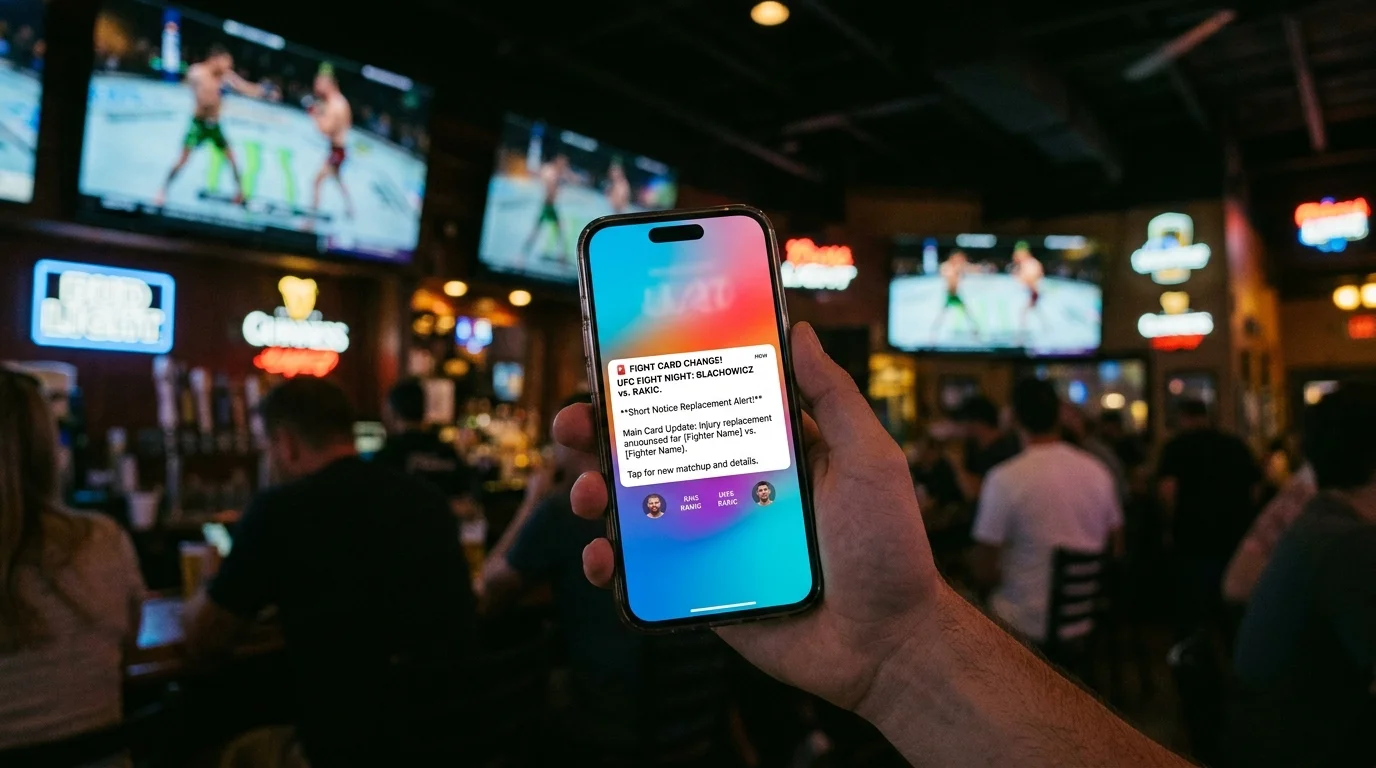
When a Fighter Pulls Out, the Odds Reset — and Value Appears
I got a text at 11pm on a Thursday in 2022 telling me a co-main event fighter had pulled out of the card I had been studying all week. My first reaction was frustration. My second — about four seconds later — was to open every bookmaker app on my phone. Those few minutes before the replacement was confirmed and the market repriced have delivered some of the best value I have ever found in nine years of MMA betting.
Short notice replacements are a structural feature of the UFC, not an anomaly. Injuries, illness, failed drug tests, visa problems, personal issues — the reasons pile up card after card. The UFC runs roughly 40 events a year, and meaningful card changes happen on most of them. With an overall finish rate of 53% in the UFC and the physical toll that training camps demand, fighters withdraw at every level of the sport. The MMA betting handle reached $10.3 billion in 2024, growing 17% year on year, and every single dollar of that volume gets repriced when a replacement walks through the door.
For bettors who understand how late swaps work, the chaos is opportunity. For everyone else, it is a trap. This article breaks down the mechanics — what the data says about replacement fighters, how lines react, and when you should act.
See also: ufc betting tips for fight-week market opportunities.
How Short Notice Fighters Perform Historically
There is a persistent myth that short notice fighters are cannon fodder. I believed it myself for years, until I tracked the data across three full seasons of UFC events and the numbers forced me to change my mind.
Short notice replacements — defined as fighters who accept bouts within 14 days of the event — win roughly 40-45% of the time in the UFC. That is below the 50% coin flip, but not dramatically so. The figure becomes more interesting when you isolate the context. Replacements stepping up a weight class perform worse, around 35%. Those already in a training camp for a different opponent perform significantly better, often matching the base rate of 50%.
The crucial variable is not the replacement itself — it is the preparation gap. A fighter who was already eight weeks into camp and simply redirects towards a new opponent has nearly all the physical preparation already done. What they lack is opponent-specific tactical work. The original fighter, meanwhile, prepared for someone completely different and must now adjust their game plan in hours rather than weeks.
Weight class matters enormously. When the UFC brings in a replacement from a lower division on short notice, the finish rate of those bouts climbs sharply. The replacement enters at a size disadvantage, often without a full camp at the new weight. Heavyweight replacements, where the finish rate already sits near 50% by KO/TKO alone, produce chaotic outcomes that the market struggles to price accurately. In lighter divisions, where decisions account for a higher share of outcomes, the replacement disadvantage is less pronounced because the fight is more likely to go to the scorecards regardless.
The record of the replacement also matters less than you might assume. I have seen unranked fighters on short notice derail the momentum of ranked opponents because preparation — not talent — is the variable that moved. Bookmakers know the replacement’s record and adjust accordingly. What they frequently underprice is the disruption to the original fighter’s plan.
How Lines React to UFC Card Changes
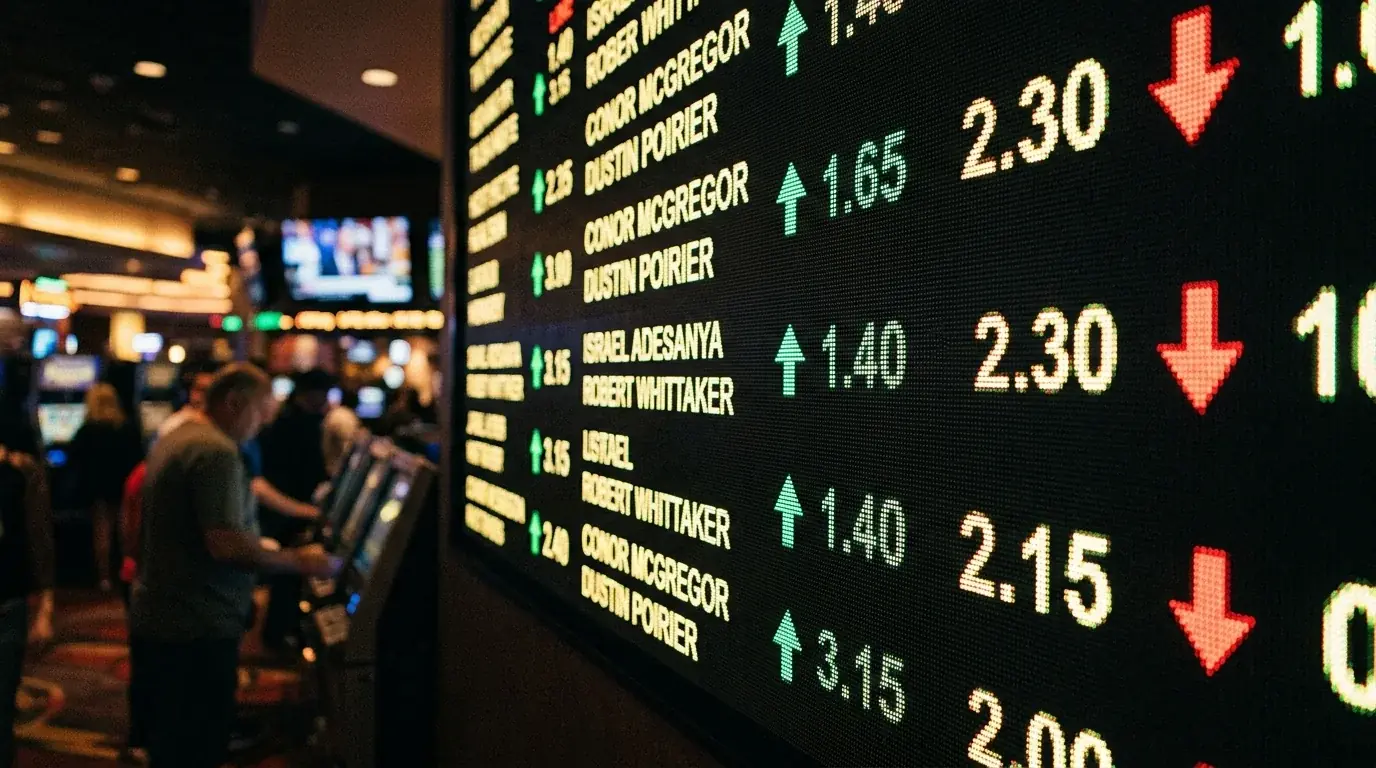
I once watched a co-main event line swing from -300 to -140 in under 90 minutes after a replacement was announced on social media. That is roughly a 15% shift in implied probability, created not by new information about fighting ability, but by uncertainty alone. The market panics first and corrects second — and understanding that sequence is where the edge lives.
The typical line movement pattern after a replacement announcement follows a predictable shape. First, the line moves sharply in favour of whichever fighter the market perceives as benefiting from the swap. Usually that means the original fighter becomes a bigger favourite, because the replacement is assumed to be less prepared. Second, the line stabilises as sharp bettors and the books themselves assess the actual matchup. Third, the line drifts slightly back towards the replacement in the final 24-48 hours before the fight, as more nuanced analysis reaches the market.
That third phase is where I find value most consistently. The initial overreaction inflates the original fighter’s line beyond what the matchup warrants. By the time the market corrects, the replacement’s odds have shortened but often still carry residual value from the panic pricing. In a $10.3 billion MMA betting market, the volume on short notice fights is comparatively thin, which means the correction happens more slowly than it would on a high-profile main event.
Timing your bet matters more here than in almost any other MMA betting scenario. If you bet on the original fighter immediately after the announcement, you are buying an overpriced line inflated by sentiment. If you bet on the replacement before the market corrects, you are capturing the widest value gap available.
When to Bet On — and Against — Late Replacements
Every card change presents a decision: does the replacement create value, or is the market right to dismiss them? After tracking these situations obsessively, I have developed a simple framework that separates the two.
Bet on the replacement when they were already in an active training camp — ideally for a fight within the same weight class, scheduled within 2-3 weeks of the bout they are stepping into. These fighters have the cardio, the sharpness, and the weight cut preparation already done. What they lack is game-plan specificity, and that matters less than general readiness in a sport where 53% of fights end in finishes anyway.
Bet against the replacement when they are moving up in weight on less than a week’s notice and their opponent is a pressure fighter with a high output style. Pressure fighters impose their game plan rather than reacting to the opponent’s, which means the original fighter’s disrupted preparation is less relevant. The replacement, meanwhile, is dealing with an unfamiliar weight, ring rust if they have been inactive, and the psychological burden of accepting a fight on short terms.
There is a third scenario that most bettors ignore entirely: bet against the original fighter. This sounds counterintuitive, but the original fighter’s preparation was designed for a specific opponent. When a southpaw submission specialist is replaced by an orthodox power striker, the original fighter’s camp is partially wasted. I have seen ranked fighters look genuinely confused in the cage against replacements whose style bore no resemblance to the opponent they had spent eight weeks preparing for.
One practical rule: never bet a replacement fight before the weigh-ins. Weight misses, last-minute pull-outs of the replacement themselves, and venue changes can all occur between announcement and fight night. The value is worth nothing if the fight does not happen.
See also: replacements often land as underdogs — read our underdog betting value analysis.
Short Notice UFC Betting Questions
Do short notice UFC replacements win less often?
Yes, but not dramatically. Replacements win roughly 40-45% of their bouts. Those already in training camp for another fight perform significantly better than those coming off extended inactivity, often approaching the base rate of 50%.
How quickly do UFC odds adjust after a replacement is announced?
The initial line movement typically happens within 60-90 minutes of a confirmed replacement. However, the market continues to correct over the following 24-48 hours as sharper analysis reaches bookmakers, meaning the best value often appears during the second or third phase of adjustment rather than immediately.
Is there more value betting for or against a late replacement?
It depends on context. Replacements already in active training camps at the same weight class often carry undervalued odds because the market reflexively discounts them. However, replacements moving up in weight on less than a week’s notice against pressure fighters are correctly priced as significant underdogs. The original fighter can also be overvalued when their preparation is invalidated by a style mismatch with the replacement.
Created by the ”ufc Betting Tips” editorial team.